Understanding IBS
What does the gut–brain connection mean?
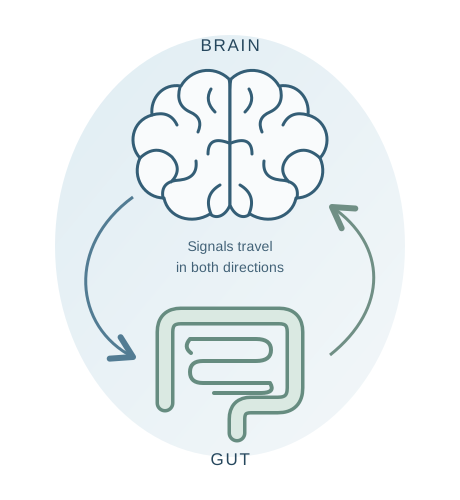
Two-way communication—not a claim that your symptoms begin in your imagination.
When someone says “gut–brain,” you may wonder whether they are about to explain your symptoms away. The phrase should open a discussion about your body, not close down the search for appropriate care.
The relationship can run in both directions
In a 12-year population study, higher anxiety predicted later functional gastrointestinal disorders in some participants. Having a gastrointestinal disorder also predicted later anxiety and depression among people without elevated scores initially (Koloski et al., 2012).
This supports a two-way relationship. It does not establish the cause of your symptoms, and the observational design cannot prove that one symptom caused another.
What about the “second brain”?
You may hear that nickname in explanations of the gut’s nervous system. It is a metaphor, not a second mind thinking independently of you. For treatment decisions, the more useful question is specific: “Which process are we trying to help, and what evidence supports this approach?”
Why psychotherapy enters the conversation
The case for IBS psychotherapy should come from treatment studies, not just an appealing description of the gut–brain axis. The science article discusses those studies. A plausible mechanism and demonstrated clinical benefit are different questions.
In our work, I want you to understand what I am suggesting and why. Medical care and psychotherapy can address different needs without either one making your symptoms less real.
References
Koloski, N. A., Jones, M., Kalantar, J., Weltman, M., Zaguirre, J., & Talley, N. J. (2012). The brain–gut pathway in functional gastrointestinal disorders is bidirectional: A 12-year prospective population-based study. Gut, 61(9), 1284–1290. https://doi.org/10.1136/gutjnl-2011-300474 (opens in a new tab)
For general education, not diagnosis or an individual treatment recommendation. Discuss new, severe, or changing symptoms with your medical team.